A TRIO OF ROUGHIES
OLGA'S HOUSE OF SHAME. Directed by Joseph P. Mawra. 1964. United States.
BAD GIRLS GO TO HELL. Directed by Doris Wishman. 1965. United States.
TAKE ME NAKED. Directed by Michael Findlay, Roberta Findlay. 1966. United States.
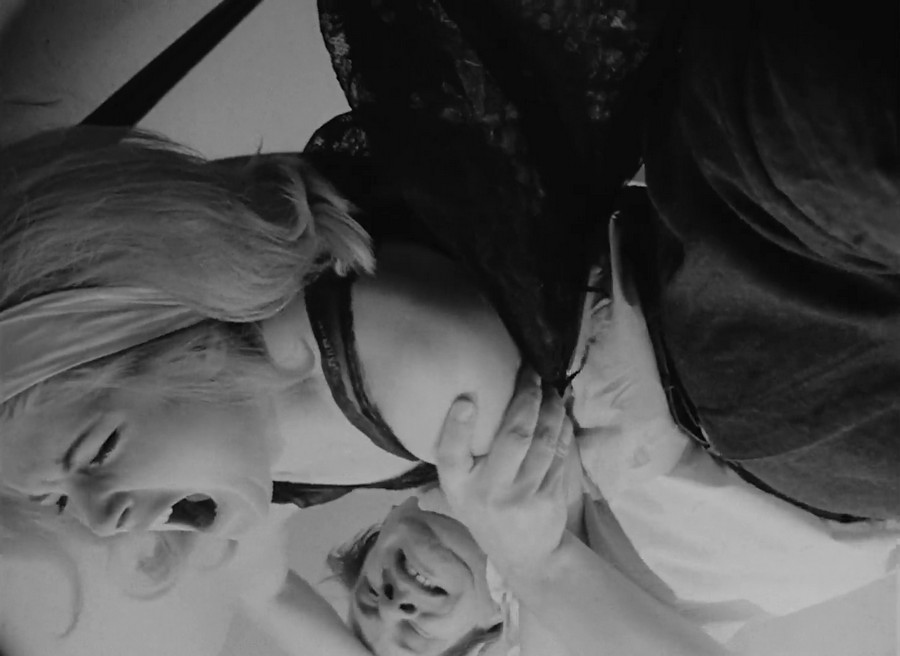
The Hays Code died in 1952, though it wasn’t a quick death. In fact, it remained on the books for quite some time after the Supreme Court wisely decided that movies qualified as protected speech. By the 1960s, many independent filmmakers all but ignored it, even if studios didn’t. They persisted in upholding it until its abolishment in 1968. The moral majority doesn’t give up its toys easily. But then again, the moral majority never did decide what went on at the Deuce, any more than they decided what played at drive-ins on the weekends. Those were the places where the fun stuff went to play.
Even before the decision in Burstyn v. Wilson came down, filmmakers were finding ways to skirt the censors. Films like MOM AND DAD (1945) or THE BIRTH OF TRIPLETS (1950) got away with showing explicit female anatomy and frank sexual discussions. All distributors had to do was get them labeled as “educational” films. Then all the audience had to do was play dumb and buy a ticket. Women in prison films flirted with lesbianism and other forms of delicious deviancy. Edgar G. Ulmer’s SO YOUNG SO BAD or John Cromwell’s CAGED feel positively transgressive compared to the sanitized product filling out the A picture slots in the movie theaters at the time.
European films were beginning to embrace sexuality and graphic violence in ways American cinema just couldn’t handle. American cinema began to feel antiquated. Movies needed to evolve, and the vehicle for that evolution would be unfettered artistic expression. Well, for the majors anyway. For the B pictures, artistic expression didn’t matter as much as visceral expression. Following the financial success of PSYCHO, films got a little more untamed. At the drive-ins and the grindhouse theaters lining 42nd Street in New York City, however, they didn’t just become untamed; they went feral. Movies like BLOOD FEAST and TWO THOUSAND MANIACS!, both directed by Herschell Gordon Lewis, put the shower scene in PSYCHO to shame and then some, filling seats (and barf bags) everywhere.
Filmed burlesque shows like FRENCH FOLLIES and DING DONG became commonplace, giving the peepshow girls a run for their money. The nudie cutie, an innocuous form of sex comedy that incorporated nudism into its story lines, exploded with Russ Meyer’s THE IMMORAL MR. TEAS and Lewis’s THE ADVENTURES OF LUCKY PIERRE. We wouldn’t even come close to sniffing hardcore sexuality in theaters until Andy Warhol’s BLUE MOVIE was released, ironically enough, in 1969. But the glut of nudist comedies and light softcore fare kept the raincoat crowd coming (pardon the pun) night after night.
But exploitation cinema is not a patient beast. It’s a wendigo, a creature with endless growing hunger. Like a serial killer, its behavior escalates. Each thrill dulls the senses. Therefore, each new thrill must be slightly more thrilling than the last. It was only a matter of time before the nudie cutie began to stop being so damn cute. With both the gore film and the nudist comedies still churning out theatergoers, what would happen if you mixed the two together, creating something that combined trope-filled, easy-to-watch camp with a little erotic S&M?
You get the roughie.
Pinpointing when and where the roughie began is a fool’s errand. You could draw lines back to Ed Wood’s THE SINISTER URGE in 1950. Hell, you could draw that line back even further to Dwain Esper’s MANIAC in 1934. Trying to figure out the exact point of creation for the roughie isn’t what I’m interested in doing right now. I’d rather just talk a bit about three foundational works. We can worry about the details some other time.
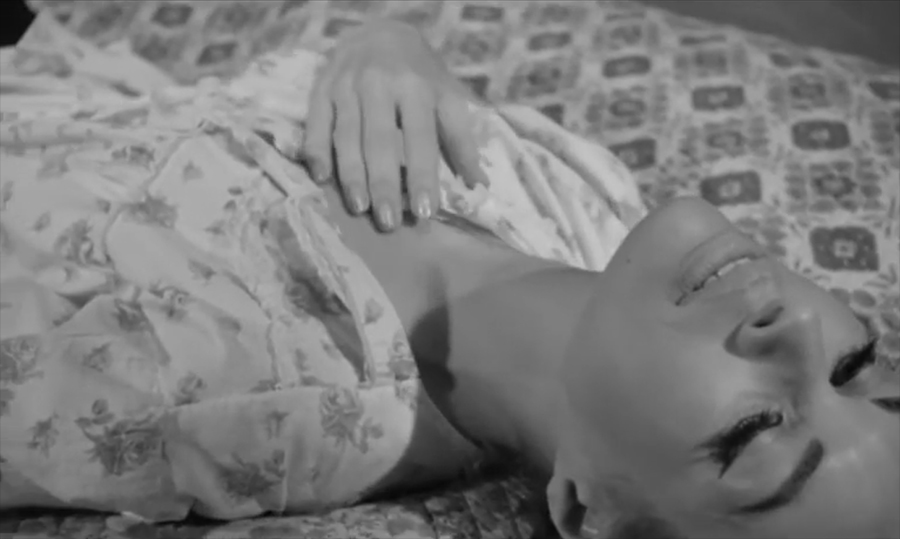
I. OLGA'S HOUSE OF SHAME
The Olga series was the brainchild of Stan Borden, a New York-based producer who ran the exploitation movie factory American Film Distribution. The man running the day-to-day production was George Weiss. He was a well-seasoned purveyor of shlock like the aforementioned TEST TUBE BABIES, Robert Dertano’s absolute stinker RACKET GIRLS, and Ed Wood’s crossdressing camp classic GLEN OR GLENDA. Cast and crew were pulled from the assemblage of talent that floated in and out of the American Film Distribution offices and its productions. This included series director Joseph Mawra and leading lady Audrey Campbell.
The films eschew the typical male antagonist, following instead in the footsteps of Jerald Intrator’s SATAN IN HIGH HEELS, a tawdy 1962 melodrama about a sultry burlesque dancer who sinks her claws into the son of her wealthy boss with murderous intent. Campbell’s Olga is no less deplorable. Olga splits her time between being a white slaver, a drug kingpin, and a pimp, kidnapping young women and enslaving them through drug addiction into a life of prostitution. Oh, and she’s a lesbian, which in 1964 was every bit as deviant to the moral majority… and a very attractive quality to the raincoat crowd.
Three Olga films were released in 1964. All run slightly over an hour and are serialized to flow into the next installment. WHITE SLAVES OF CHINATOWN was the first, followed by the much better (though no less awful) OLGA’S GIRLS. You could choose any of the three films to watch and get the whole story. Everything I’m about to say about OLGA’S HOUSE OF SHAME, the final film in this trilogy, is true about the rest of them.
Right away, I feel compelled to point out that the story is not the focus of these films or any film categorized as a roughie. These were not movies you went to watch for a compelling narrative or deep dives into the psyche of complex characters. Rather, think of these films as cheap, disposable literature, rife with tropes, cliches, conveniences, contrivances, and the occasional slapped face and bared breast. The ticketgoers who flooded the Cameo on weeknights were there for a reason, and it wasn't to experience a masterpiece of cinema. Raincoats were in the back, dealers were in the bathroom, and tricks were wandering the aisles. You went to see these films to "watch" them, not think about them, your attention only focused straight ahead when the really salacious bits started.
Narrative is such a minor concern here that there are probably fewer than 30 lines of actual dialogue in the entire film. The rest is just narration delivered by Joe Holt, his monotone voice describing everything we see on screen. We know that Olga and her brother/partner in crime, Nick, have set up shop in an abandoned mine (which we never see) after the events of the previous film because that’s what the narrator says happened. If it weren’t for Holt’s narration, we wouldn’t know that the young woman we see Nick and Olga manhandling at the start of the film is a courier named Elaine who was supposed to deliver jewels to Olga, but stiffed her. Every internal thought and desire will be described to us in ceaseless voiceover. Hell, even conversations we see happening on screen will be narrated to us. Tight schedules and even tighter budgets meant there was no way to capture live sound. If bad dubbing and drab voice-over bother you, you're in for a bad time.
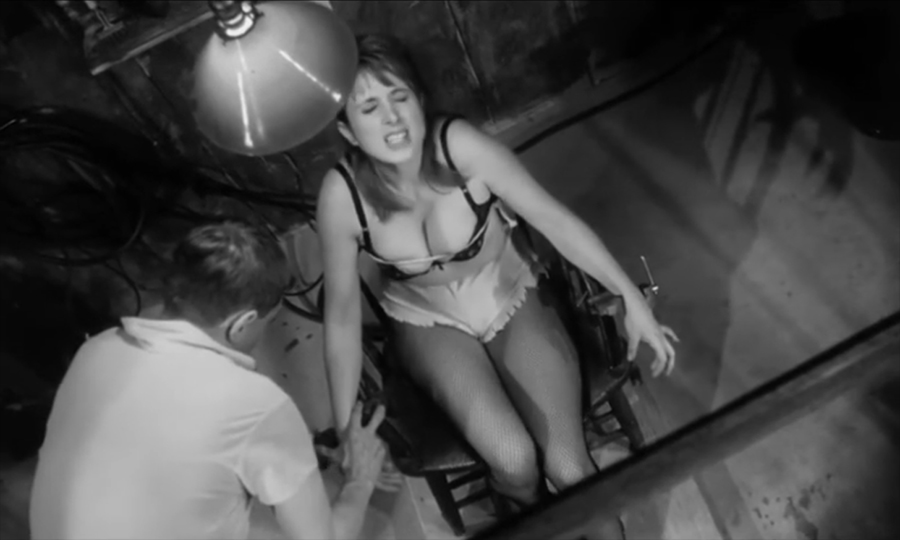
We very quickly find the film settling into its rhythm. A new girl is delivered to Olga. She looks them over like a cheetah sizing up a gazelle. Olga puts them to work. At some point, the girl falls out with Olga. Olga instigates some light torture. Rinse and repeat. We get a couple of glimpses of depravity early on and an example of just how tame this all is today. Olga slaps Elaine across the face with barely any energy from Campbell and very little reaction from actress Judy Young. Meanwhile, Nick is shown torturing a woman (played by future Arquette family matriarch Brenda Denaut) in the other room. He places a vice around her neck as she lazily writhes around, clad in just a bra, her face displaying paroxysms of mild discomfort as Mussorgsky’s Night on Bald Mountain blares on the soundtrack.
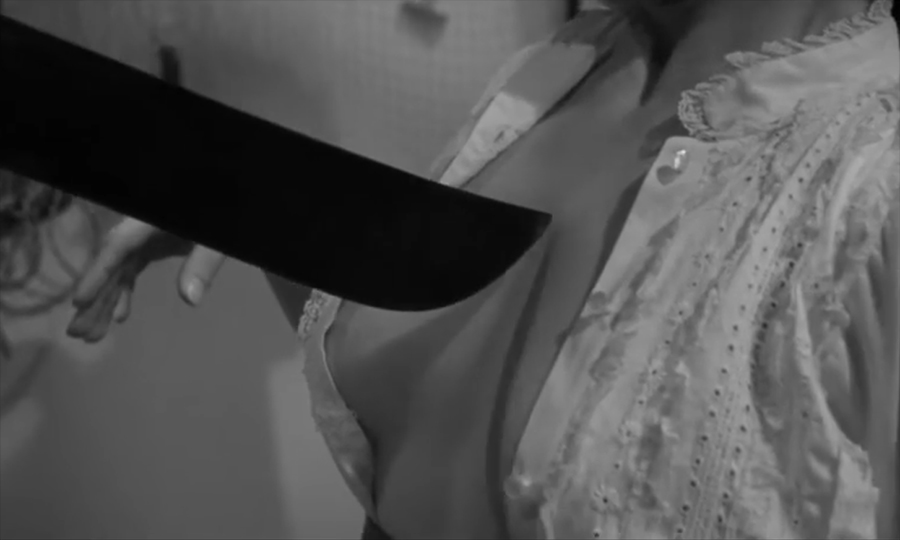
Later, we see Elaine and another girl, Paula, packing pills. Olga ogles her newest acquisition, the belly dancing Marianna. One of Olga’s girls, Christine, is caught chatting with a competitor, so she’s tied up, gently prodded with a machete, and then has her fingers crushed with pliers, a torture she endures without so much as a whimper or a tear. This oddly detached reaction to physical violence runs throughout the entire series. For a franchise that contains whippings, floggings, murders, stripteases, forced abortions, women being unwillingly hooked on drugs, and electroconvulsive torture, they are shockingly devoid of shock. SALO they are not.
But then, 40 minutes into this 70-minute movie, all the lame attempts at provocation finally pay off, giving those in attendance exactly what they paid for. Denaut and Susan Small are tied to a tree and whipped, their shirts torn open, breasts exposed. Connie Oliver is tortured again with pliers, this time to her nipples. Jackie Miller has her bra removed and her arms tied to a beam behind her back. Angel Antree gets a long, tedious spanking with a wooden plank. Alice Denham is tied to stakes in the ground and horsewhipped topless. Olga threatens to rape a runaway in the woods before retreating to her hideout to watch a topless dance and engage in some suggested masturbation. This is what the 42nd Street perverts came for, and the film wallows in it. The narrative eventually collapses into a light, softcore lesbian orgy before ending with a cliffhanger.
The Olga series was a smash success for American Film Distribution and a gift to theater owners hungry for cheap, quick exploitation fare. Much of that success lies on Audrey Campbell’s shoulders. Sleek and cool, she has that Mary Woronov energy, absolutely domineering every second of screen time she receives. She has a genuine screen presence, even while stuck in garbage like this. It’s the cheapness of the production that lets her down. But they were still extremely successful, playing in theaters well into the 1970s. Even as softcore became hardcore and the roughie went from playful perversion to really rough shit like Shaun Costello’s FORCED ENTRY and WATER POWER (aka THE ENEMA BANDIT), Madame Olga stayed popular with grindhouse regulars. Watching these films now in 2026, they feel like fossils. Too meandering to be entertaining, too tame to be provocative, too softcore to be a cheap thrill. Still, there is no denying their influence. If you are aching to dive into the roughie, you’ll find yourself in Olga’s grasp sooner or later.
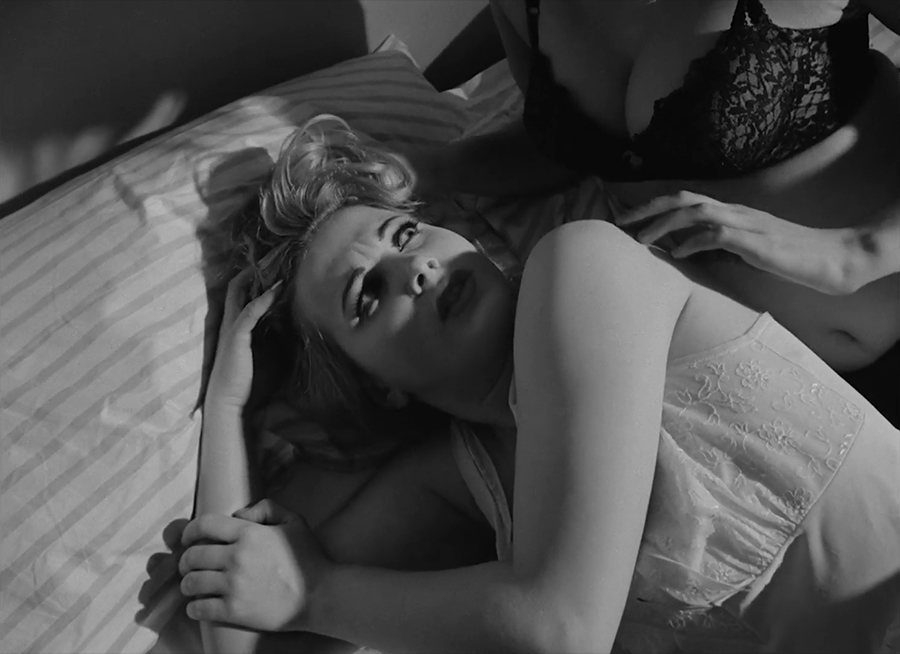
II. BAD GIRLS GO TO HELL
Say what you will about exploitation films, but they certainly knew the power of a good title. BAD GIRLS GO TO HELL sounds like the name of a rollicking romp through perversions, depravities, and untold pleasures. It’s the kind of provocative title that sets drive-in cash registers ringing all across the country. With a trailer that promised “the boldest and most intimate scenes ever shown on any screen”, Doris Wishman’s roughie classic debuted on the Deuce in 1965 and marked the director’s full-time departure from harmless nudie cuties to true sexploitation sleaze.
Wishman was a rarity among exploitation filmmakers, a female director with every bit as keen an eye for sensationalism as her male counterparts. Her solo feature debut, the 1961 camp classic NUDE ON THE MOON, was a hit for Jerry Balsam’s J.E.R. Pictures and led to a slew of nudist pictures and steady employment for a director on the rise. Just one problem… NUDE ON THE MOON was credited to a fictional male director. It wouldn’t be the last time Wishman’s name would be replaced in a picture. But no matter, BLAZE STARR GOES NUDIST, Wishman’s charming little follow-up starring the titular statuesque burlesque dancer (as well as future Herschell Gordon Lewis collaborator and BLOOD FEAST scribe Louise Downe) was an even bigger success. Wishman, credited or not, was becoming a fixture in the industry. Like her cousin, prolific genre producer Max Rosenberg, Wishman could spot a trend a mile away. By 1965, it was clear to everyone that the nudie cutie had run its course. Newer avenues needed to be explored, and right now, there was no hotter spot than the roughie.
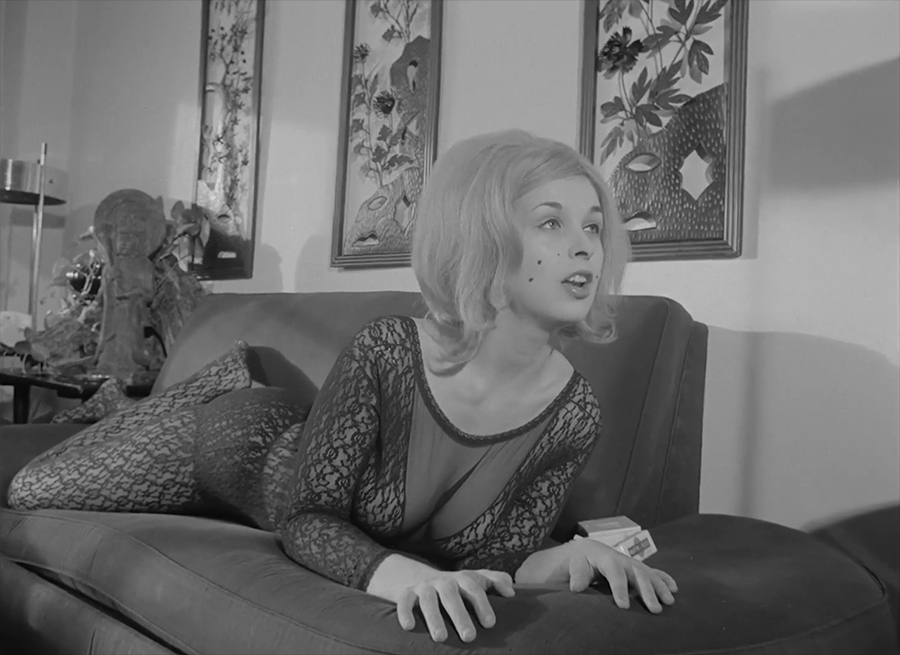
Earlier that year, Wishman dipped her toes into the roughie waters with THE SEX PERILS OF PAULETTE, a tawdry little melodrama about a wannabe actress’s slide into prostitution. Like much of Wishman’s output, it was not particularly well made, succeeding largely because of the beautiful one-two punch of Anna Karol and Darlene Bennett (who had starred in OLGA’S GIRLS the previous year). The film has all the appeal of a lethargic, drunken striptease, a test of patience for the perverts, and maybe a bit too languid a pacing for anyone but the most hardened exploitation fan. Still, the film was a big enough success to keep Wishman moving forward.
Far from being the promised parade of perversions, BAD GIRLS GO TO HELL is a somber, sometimes even outright depressing, beast. Gone entirely is the lighthearted, campy tone of Wishman’s nudie cuties. This isn’t a feel-good kind of movie. Rather, it is an endless stream of degradation and abuse, all levied at Meg, a happily married woman who is attacked and raped by the maintenance man in her apartment building. In retaliation, she brains him with an ashtray, killing him. Wracked with guilt, Meg skips town and heads to New York, where she takes the name Ellen.
Meg meets an unassuming man named Al in Central Park. He takes Meg in, but eventually loses his cool with her after she accidentally helps him fall off the wagon. He whips her senseless in a drunken rage. After skipping out on Al, Meg meets Della, a lovely little number with a penchant for lounging about in her underwear. Della creeps into Meg’s bedroom as she sleeps and puts the moves on her. The two have consensual sex, but Meg, perturbed by her burgeoning lesbian feelings for Della, skirts off into the night. Her next attempt at finding a home ends with her being punched unconscious and assaulted. Misery compounds, leading to a ridiculous finale that recontextualizes the whole movie as something a little less misery porn and a little more twisted wish fulfillment.
All the signs of a speedily produced cheapie are present. All the dialogue is ADR. To hide this fact from the audience, the film usually cuts away from whichever character is talking or has them facing away from the camera. The editing is rough and sometimes doesn’t match. Wishman ends a scene by pressing her camera right into the stomach of an actress. The soundtrack rarely takes a moment off, endlessly blaring in the background.
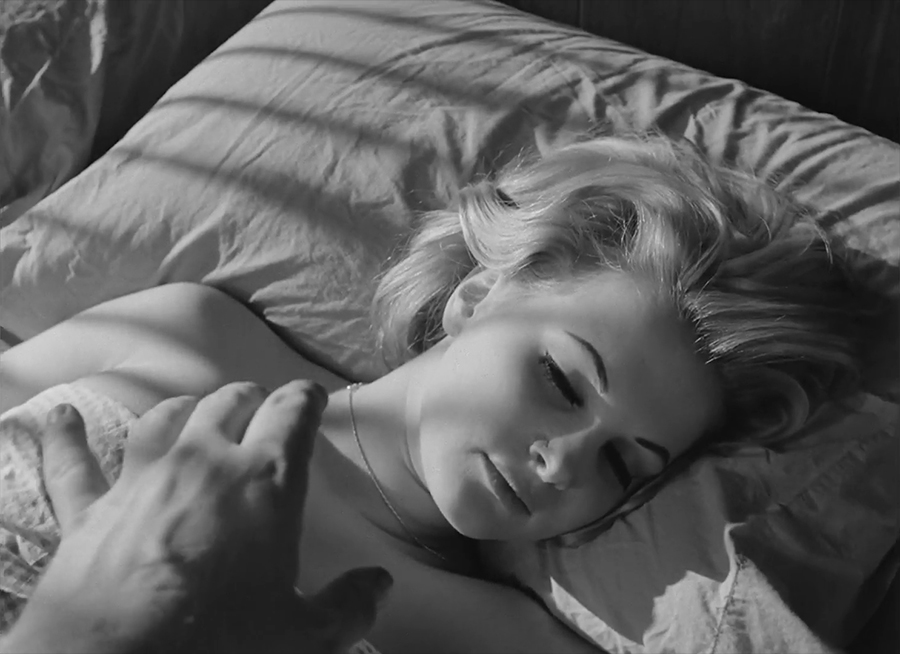
Blonde knock-out Gigi Darlene (who played one of Olga’s girls in WHITE SLAVES IN CHINATOWN) spends much of the first act of the film in a barely there negligee and a sizable portion of the second in her underwear. It’s a weird move, one needed for audience retention, but it clashes headfirst with a narrative all about the repeated sexualization and brutalization of our lead character. It’s a bit like including rampant sex in your film about abstinence. To Wishman’s credit, she never attempts to frame Meg as the cause of all her problems, which at least sets her apart from many of her male contemporaries at the time, but there is a definite disconnect between presentation and subject matter here.
While the ever-escalating abuse does become eye-rollingly laughable towards the finale, BAD GIRLS GO TO HELL does have a real gravity to it. Sure, it’s absurd and poorly made, but Gigi Darlene is drop-dead gorgeous, and her pouty lips and bright eyes convey genuine emotion during her scenes of distress. If the utter absence of anything approaching real human emotion is what sinks OLGA’S HOUSE OF SHAME, that level of empathy helps BAD GIRLS GO TO HELL transcend its sleazy, navel-gazing roots. Make no mistake, this isn’t a good film, but it is a memorable one despite all its flaws.
III. TAKE ME NAKED
Like Wishman, married filmmaking duo Michael and Roberta Findlay arrived at the roughie with a hit already behind them. BODY OF A FEMALE made bank on a $6,000 budget. Stan Borden knew potential when he saw it and threw his financial support behind the team. TAKE ME NAKED was shot quickly and cheaply. According to Roberta, when Stan finally saw the finished product, his reaction was one of extreme disbelief.
The film begins with a long, unwavering shot of bare breasts. Over the image, credits play along with voice-over narration. By now, you should be used to hearing me say that this film was recorded without live sound, with each and every moment of human voice being provided by an omnipresent narrator. Only this time, the narrator’s voice-over isn’t describing the scenery or standing in for dialogue. No, it’s reciting The Songs of Bilitis, a collection of French erotic poetry written by Pierre Louÿs. All things considered, this is a surprisingly heady introduction for a movie of this sort.
The still shot of breasts gives way to an alcoholic wandering the streets. The shots of New York City on offer look downright post-apocalyptic. Puddles, gutters, mounds of trash. Right from the get-go, the film feels oppressive and dank, utterly grubby in a way that feels at odds with the flowery, highfalutin words flowing on the soundtrack. We follow one of these drunks back to his apartment and watch as he stares out his window at an apartment across the way.
The drunk watches a woman, Elaine (played by Roberta Findlay), as she sits in her underwear on the couch in her living room, sipping scotch and masturbating. He watches her shower and get dressed… but how? We see that her blinds are down. How can the drunk be seeing any of this? Pay no attention to things like that. Just sit back and listen to the poetry and the light jazz as the camera gives us close-ups of hands rubbing nipples, navels, and stomachs.
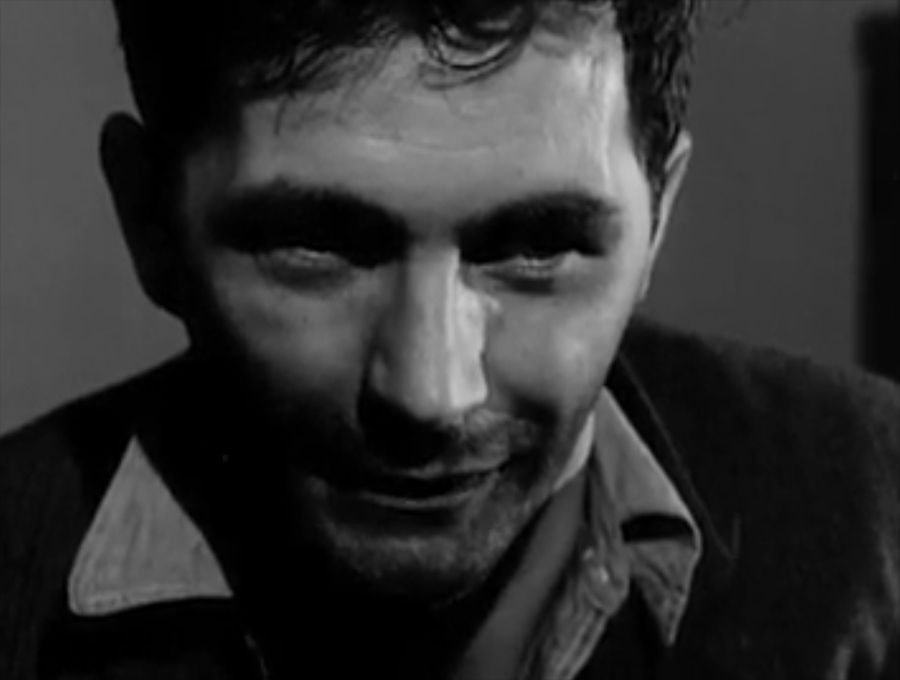
Tired of perving on Elaine, the drunk hits the hay, and Roberta Findlay takes over the narration. She imagines some tame lesbian sex and a relationship between an unknown woman and a man. At this point, TAKE ME NAKED gives up all pretenses of being a narrative film and instead becomes a quasi-surrealistic study of its co-director’s breasts. Exploitation regulars Sally Farb and June Roberts (who starred in Barry Mahon’s THE BEAST THAT KILLED WOMEN, a highly recommended piece of camp awfulness about a killer gorilla terrorizing a nudist resort) show up to engage in some blurry lesbian histrionics. More and more Vaseline is smeared on the lens until whatever potential sleaze we might be seeing is reduced to an oily blur.
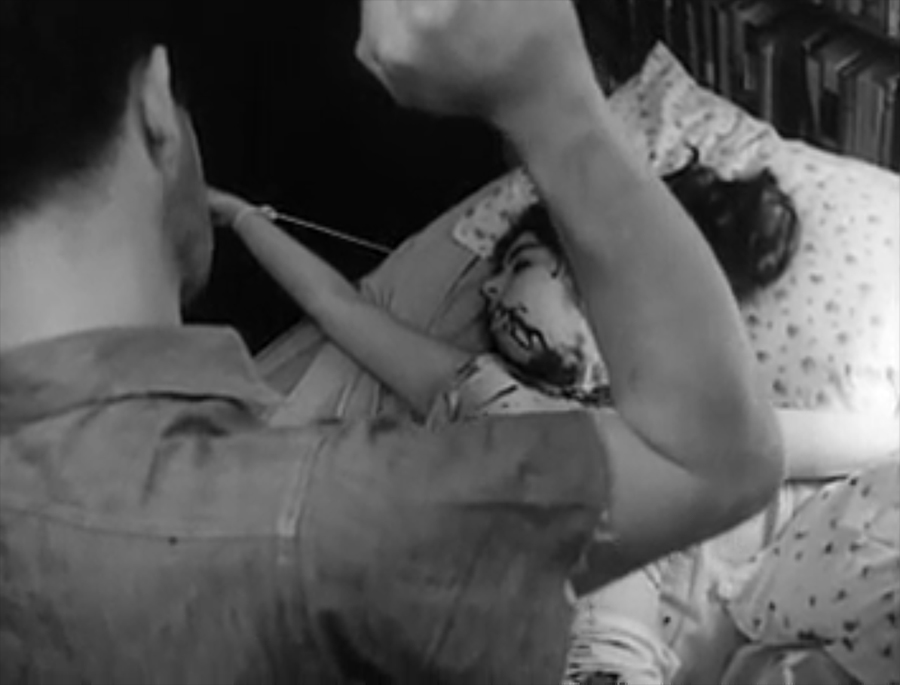
Eventually, Mike Findlay stumbles back into the film. He played one of the bums at the beginning. He walks into the drunk’s house and wakes him up by shoving a bottle of booze in his face. The drunk, still wasted, mistakes this friendly act for a bit of homosexual flirting. The drunk beats him to death. The film ends with the drunk, lost in alcoholic-induced psychosis, visiting Elaine with a kitchen knife and stabbing her to death. He then has sex with her corpse, all the while imagining the whole ordeal as some innocent romantic tryst.
Stan Borden was right to be put off and confused by the film the Findlays delivered to him. This is the first of our roughie trio that earns the title of ‘roughie’. It is an agonizing watch, deeply unpleasant and distasteful. You almost miss the cartoon violence of the Olga films. Here, the stabbing is protracted and bloody, and the geekshow ending feels more punishment than simple outrage bait. It’s nasty and weird. And would you believe it? It made money.
The Findlays were off to the races after this one debuted, reteaming with the Amero brothers, John and Lem, for a trilogy of films that would stand the test of time as their magnum opus. The Amero brothers worked with the Findlays on BODY OF A FEMALE. They would go on to have exploitation careers of their own, creating the grindhouse classic THE LUSTING HOURS in 1967 and a whole catalog of hardcore porn, gay and straight, in the 70s and 80s. The Flesh Trilogy - THE TOUCH OF HER FLESH, THE CURSE OF HER FLESH, and THE KISS OF HER FLESH - has become legendary and rightfully so. It distilled the entire roughie subgenre into three unique, nasty, and terrible gruesome classics, with Findlay’s villainous Richard Jennings proudly standing alongside Audrey Campbell’s Olga as one of the all-time great grindhouse villains.
Michael and Roberta Findlay would split sometime in the early 70s, but not before accidentally creating yet another landmark moment in the history of the Deuce. In 1971, the duo flew to Argentina to shoot THE SLAUGHER, a cheap thriller heavily inspired by the exploits of the Manson Family. Try as they might, they could not find a buyer for it back in the States. It sat on the shelf for three years before exploitation producer Allen Shackleton purchased it and tacked on a brand new ending. He even gave it a new name: SNUFF.
Michael Findlay died in 1977, decapitated in a helicopter accident. Roberta briefly had a fling with Shackleton, becoming not just his lover but an employee. She went on to have a fairly long career in hardcore porn before returning to softcore thrillers with TENEMENT and THE ORACLE in 1985. By that point, 42nd Street was hardly recognizable. The roughie was gone, replaced by sleek Cinemax softcore and shot-on-video trash. The end of an era, for better or for worse.
Looking back on the roughie today, I would be lying if I said it was a masterful subgenre full of transgressive wonders and underappreciated gems. It’s a curiosity and a time capsule, like digging through an old box of postcards that reek of 50 years of stale cigarette smoke. They lack the gruesome charm of the old gore flicks or the cutesy camp of the nudie cuties. Many are unwatchable. Some are genuinely interesting. Regardless, they were an important byproduct of the Hays Code, independent cinema’s primal scream after years of repression. They are the things guilty pleasures are made of.