HANDS OF THE RIPPER
Directed by Peter Sasdy. United Kingdom. 1971.
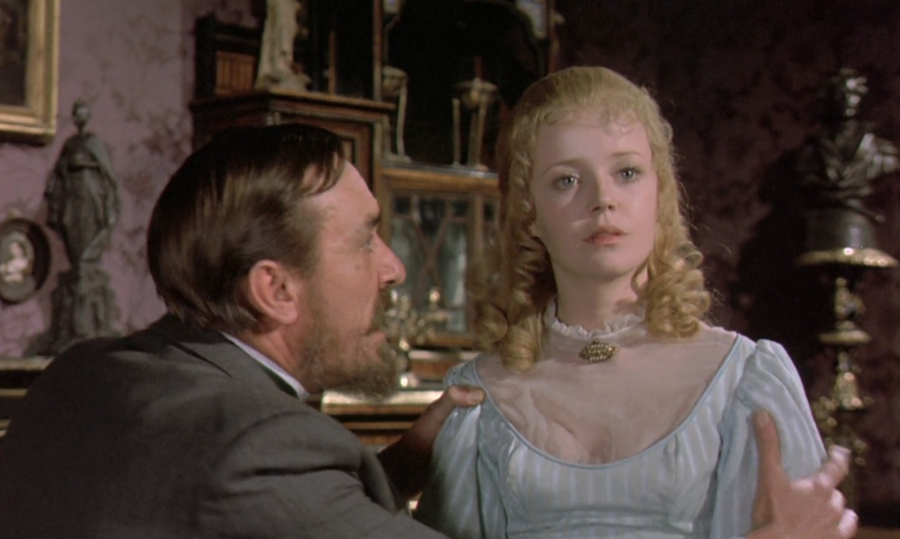
Peter Sasdy’s HANDS OF THE RIPPER begins in glorious Hammer fashion, with fog-shrouded streets and a torch-carrying mob chasing a man through the night. The man in question enters his home and finds his wife tending to their young daughter, Anna. His wife shares the troubling news. There’s been another murder. Jack the Ripper has struck again. Then she sees her husband’s hands covered in blood. “It’s you they’re looking for”, she cries out. Without hesitation, he stabs her to death. Bloody Jack drops the knife and picks up his crying daughter from her crib, kissing her on the cheek.
Years later, Anna is living with Mrs. Golding, a hack spiritualist using fake seances to defraud grieving families. After her latest victims leave, a gentleman arrives, a politician named Mr. Dysart. He’s not here to have his fortune read or to commune with his dead relatives. No, he’s here for 17-year-old Anna. Turns out Mrs. Golding isn’t just a fraud; she’s a pimp as well. Left alone together, Dysart presents Anna with a shiny bauble. The light dancing off the jewelry causes Anna to slip into a kind of fugue state.
Mr. Pritchard, a rational skeptic and psychologist who attended the earlier séance, hears screaming coming from Mrs. Golding’s house. Rushing up the steps, he passes by a very distraught Mr. Dysart. When Pritchard enters Anna’s room, he finds the young woman borderline catatonic. Mrs. Golding is in far worse shape. She’s been impaled with a fireplace poker, the weapon driven so forcefully into her body that it’s pierced through the thick bedroom door.
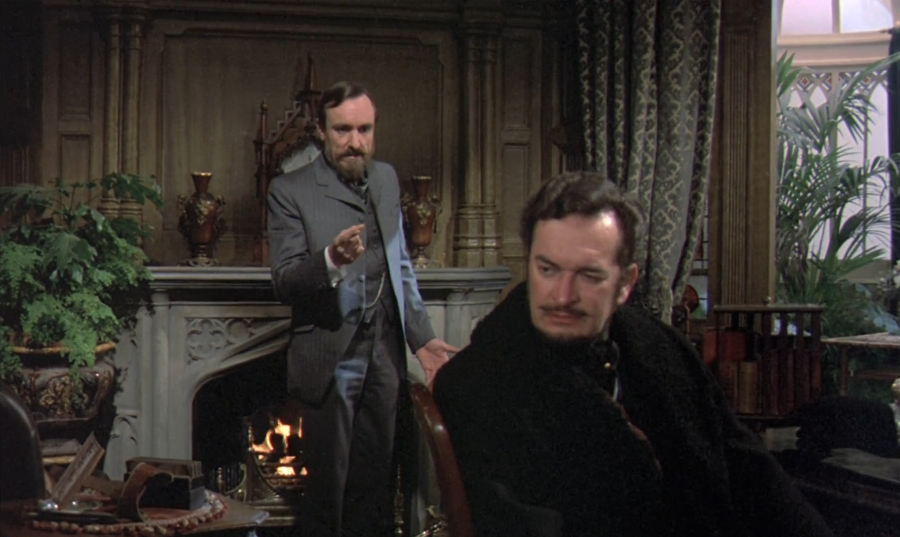
Recognizing a good case study, Pritchard brings Anna home to live with him, his adult son, Michael, and Michael’s blind fiancée, Laura. Pritchard has fallen under the spell of Freud and his newfangled psychoanalysis. He believes Anna’s mental troubles are caused by deep-rooted trauma. He wagers he can help her. Instead of feeding yet another murderer to the hangman, he can use Anna to study violence and overcome its causes. What begins as a genuine scientific and humanist interest in the young woman escalates into something more intimate for Pritchard.
Unfortunately for everyone involved, Anna’s trauma response has an innocuous trigger, but a deadly outcome. After bathing and dressing for a fancy dinner, the housemaid gives Anna a shiny piece of jewelry and a friendly peck on the cheek. Anna, lost in a stupor, slashes her throat with a broken hand mirror. Pritchard covers up the crime, and his interest intensifies. But no matter how much he digs, Anna’s past remains a mystery. She has blocked much of her trauma. Pritchard uses Dysart to help him find information, but it’s a dead end. Dysart directs Pritchard to a medium, and it’s there that Anna, under a hypnotic trance, reveals her past.
HANDS OF THE RIPPER is one of my favorite Hammer films. On its face, it’s your typical Hammer production. Beautiful interior sets, lovely shots of wonderfully decorated British streets and homes, stately dialogue delivered respectably. It’s a gorgeous, exquisitely produced film. This makes the gruesome violence all the more impactful, and HANDS OF THE RIPPER is quite capable of being gruesome. In the most shocking scene, Anna rams a whole handful of hat pins through a prostitute’s hand… and then directly into her eyeball. This mix of good British manners and gooey gore is the hallmark of a good Hammer experience, and it is here in spades.
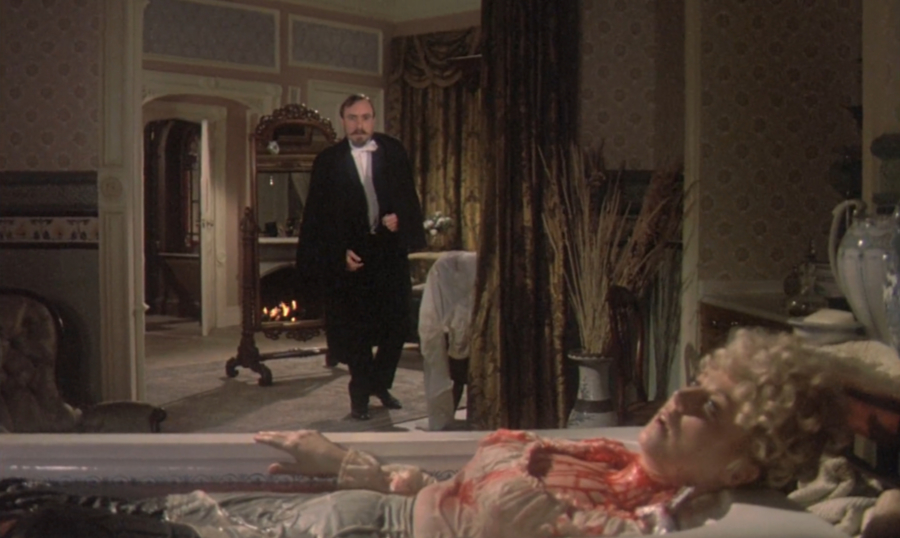
But once you look past the lovely, crimson-drenched exterior, HANDS OF THE RIPPER blossoms into something incredibly unexpected. This is an emotionally damaging little film. It is not a scare factory or an exercise in gross exploitation. It’s far more sad than it is frightening. Anna is not a routine villain from a mindless slasher film. She’s as much of a victim as anyone, a mentally shattered young woman whose trigger is not anger or desperation, but simple affection. Something as wonderful as a kiss on the cheek has forever been perverted by her terrible father.
It certainly helps that Angharad Rees has large expressive eyes and a kind face, even though she never stops looking a decade too old for the part. Her joyful expression at being invited into a real home and a real family is lovely. It’s difficult not to want the best for her or feel profoundly disappointed when the stately Dr. Pritchard turns out to be yet another destructive father figure in her short, tragic life. She doesn’t fail by choice or desire. She has been programmed to fail, condemned to a life of violence through childhood trauma and the ill-intentions of the man she trusts to help her. This melancholic narrative culminates in a tense, Hitchcockian suspense sequence inside St. Paul’s Cathedral that sends the film out on a tragic note.
To its credit, the film never forgoes projection for possession, never betraying its more rational roots as a psycho-horror thriller. Anna often hears the whispering voice of her father while in the throes of her dissociative disorder. It would have been easy for the filmmakers to make this into a simple, cheesy possession story. Instead, it stays true to its subtextual roots. It’s a tragic story of an innocent woman’s downfall, all caused by the arrogance and poisonous attitudes of the men in her life. A true feel-bad horror movie, buoyed by strong performances and staggeringly beautiful art direction. Not your average Hammer film, and all the better for it.