THE LAST HOUSE ON DEAD END STREET
Directed by Roger Watkins. United States. 1973.
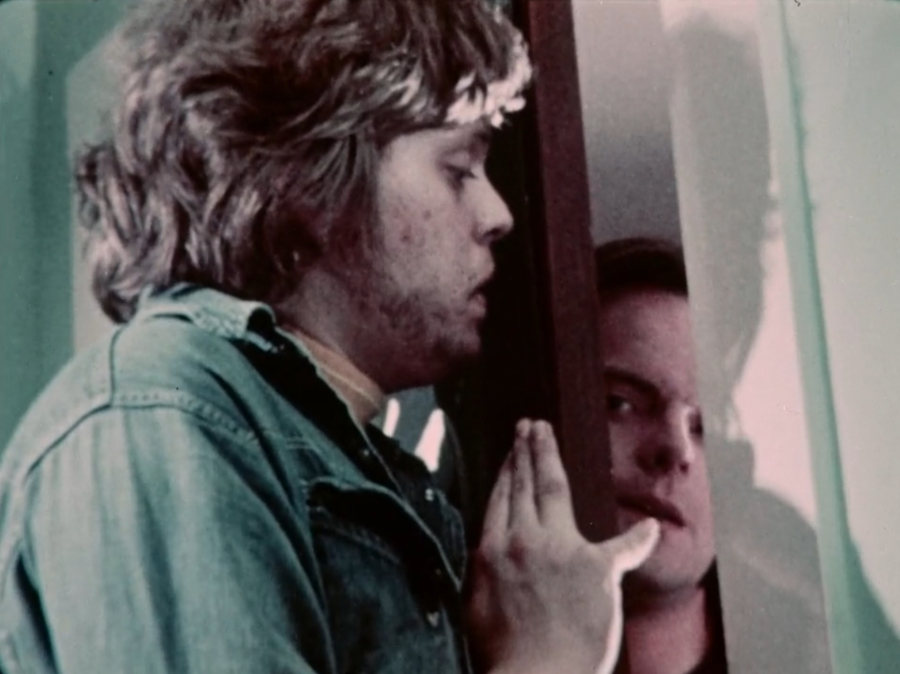
THE LAST HOUSE ON DEAD END STREET begins with simple credits over a black screen. The only sound is that of a beating heart. The darkness soon gives way to abstract shots of spires, rooftops, stone faces carved into concrete, a man's silhouette slowly descending a staircase, and ornate overhangs on crumbling buildings. The heartbeat is now mixed into a cascading cacophony. Clanging metal, Gregorian chants, droning synth pulses, and shrieking blasts of electronic noise. It all feels like an Impressionist nightmare.
A man enters frame. A disconnected voiceover tells us this is Terry Hawkins, freshly released from prison after serving a year for selling drugs. He’s understandably bitter, but also hopelessly bored. He doesn’t want to go back to his old life of making stag films for no money. He wants to make something new, something different, something that will really give modern audiences what they want. Terry wanders around outside a deserted college building. Cold and barren, the film feels set in some post-apocalyptic landscape. He breaks into the building. This is where he’ll make his avant-garde mark.
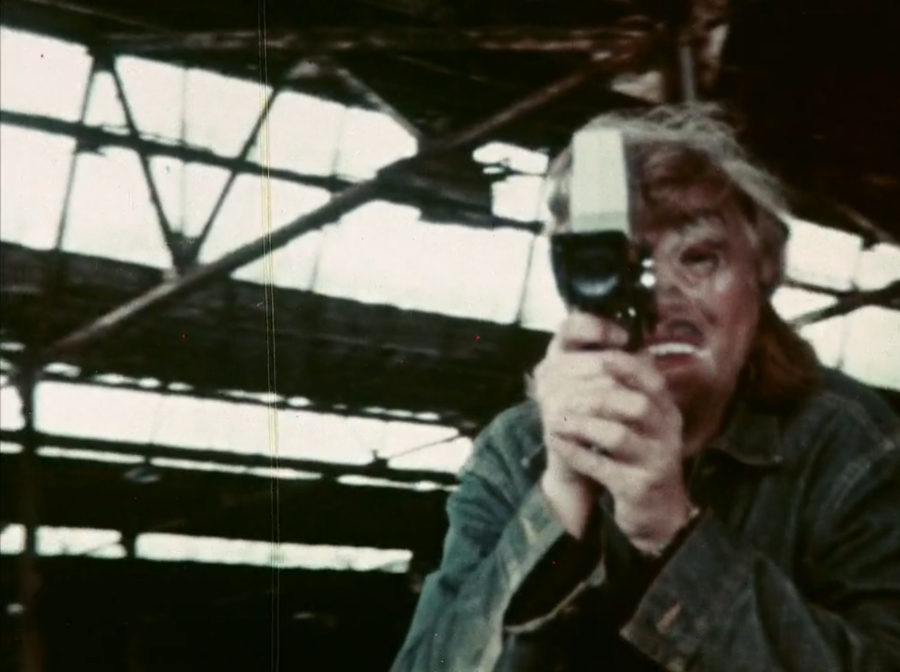
Terry assembles a crew. Two amateur actresses, Kathy and Patricia, a cameraman named Bill, and an ex-porn actor named Ken. He even secures some early financing from a distributor named Steve Randall, a known associate of porn director Jim Palmer. Jim has a bored, sometimes porn actress wife named Nancy. With his crew assembled, Terry makes his first film. They tie up a blind man. The women flirtatiously toy with him before Terry, wearing a bizarre oversized Greek mask, strangles him to death, all in plain view of Bill’s handheld 8mm camera.
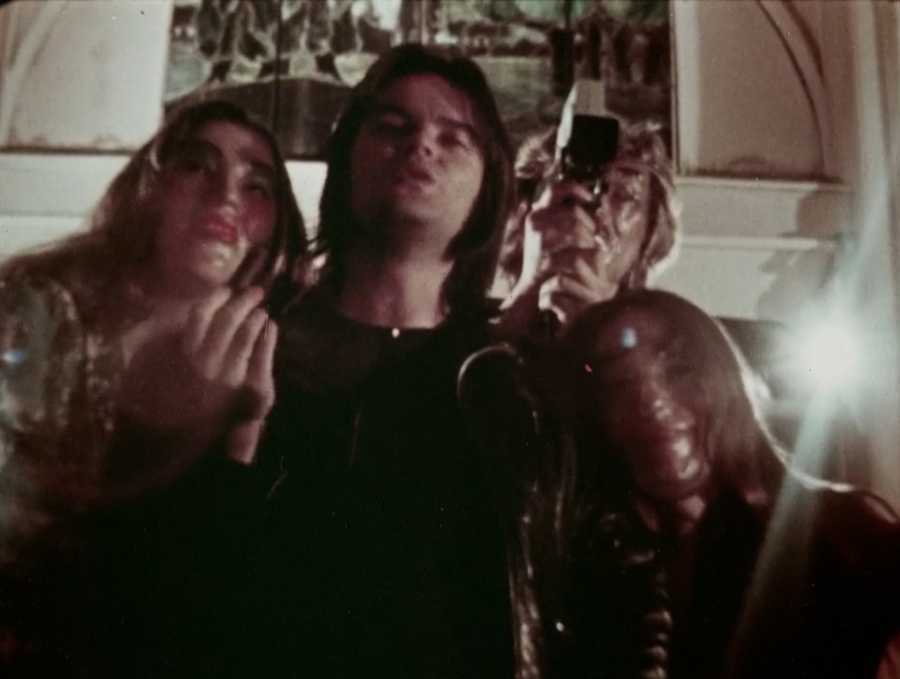
Terry visits Steve’s home, but he isn’t there. He’s greeted by Nancy instead. Terry quickly seduces her, and the two have sex. Later, he shows her his film. When she questions how they could have committed murder on camera, Terry snaps at her, accusing her and her husband of trying to steal his film and sell it as their own. As punishment, he rapes her and leaves.
The next day, Terry and Co. set a trap for Steve, inviting him and a starlet named Suzie to visit the set of his next film. When they arrive, they are attacked, captured, and bound. When Steve regains consciousness, he’s horrified to see that Terry’s crew have already kidnapped Nancy. They’ll soon collect Jim too, taking him back to the abandoned college. With the cast assembled, Terry begins production on his masterpiece, a nauseating parade of torture, mutilation, and humiliation.
THE LAST HOUSE ON DEAD END STREET is corrosive. Those expecting a moment of respite during its lean 78-minute running time should leave those hopes at the door. This is angry, raw filmmaking, shot for less than $3000 by amphetamine-fueled amateur filmmakers with no compunction about breaking rules. The version we have today is incomplete, hastily and messily edited down from a full three hours. According to Roger Watkins, the film’s director, the first 20 or so minutes of the original edit were nothing but slaughterhouse footage. You know, just to set the mood. We still have some of that in here, by the way. Within the first 10 minutes, you’ll see a cow being bled out, a river of red pouring from its throat to the gore-soaked floor of the abattoir.
This is not comforting exploitation or a lackadaisical gore flick. There is real anger here, real condemnation. The film envisions the world of underground, independent moviemaking as a new kind of flesh trade, swapping out sexual exploration of bodies with hands digging around in chest cavities. Erotic penetration is exchanged for a drill bit in the eye. Steve talks about money while a topless woman, done up in blackface, is whipped by white perverts at an upper-class sex party full of his business associates. In a perversion of pornographic excess, a man is forced to fellate a severed deer hoof held between the legs of a topless woman. In this film, everything relates to violence and only violence.
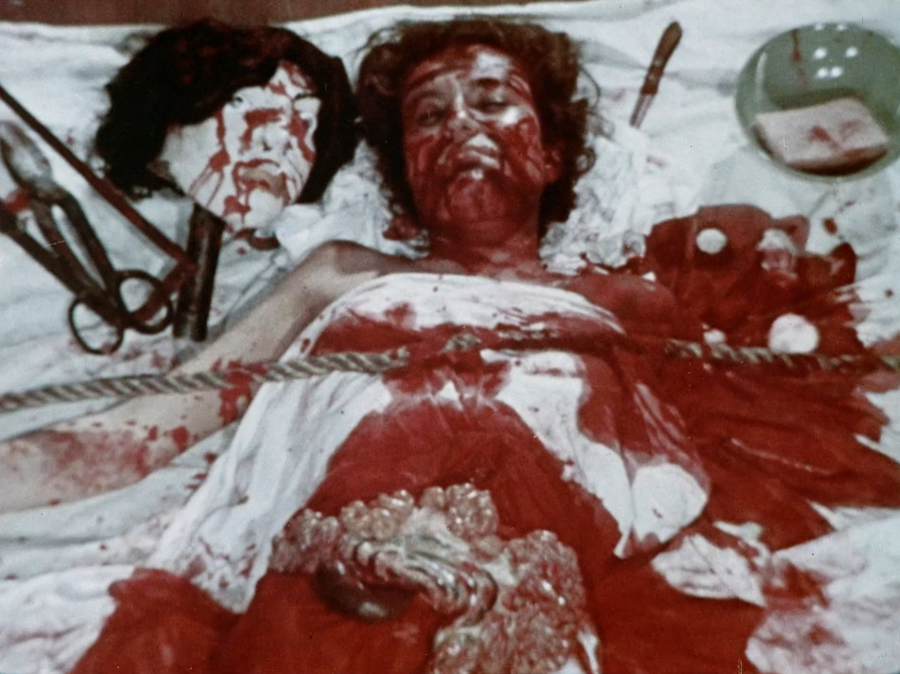
The ritualistic killings are full of pageantry and farcicality, staged like set pieces in a film, which of course they are, tying the act of filmmaking to the act of murder. Suzie is tortured by being branded with a hot iron, calling to mind Hitchcock’s joke about actors being nothing but cattle. Like the cow at the start of the film, she’ll have her throat sliced open, and her blood spilled to the floor. The centerpiece is the horrific murder of Nancy. Tied to a large table, she is repeatedly cut around her eyes and mouth, her blood being smeared on her face like an actress in a make-up chair. Terry saws her legs off with a hacksaw, arranging them like decorative objects in the mise-en-scene. When she passes out, they wake her with smelling salts, a good director offering up fresh shocks to his captive audience. Eventually, Ken eviscerates her, pulling out her guts one sloppy handful at a time. A human being reduced to a special effect, again slaughtered like a cow.
Like THE TEXAS CHAINSAW MASSACRE (which this actually preceded by two years; legal issues kept Watkins’ film on the shelf until 1977), this is a film more preoccupied with mood than narrative. Both films are light on story and show little interest in anything like a psychological exploration of their killer’s motives. Instead, they have expertly crafted worlds and bad attitudes. The interior of the murder house in Hooper’s classic is some of the most effective art design in all of horror. Just think about that dinner scene. The confrontational editing that confuses spatial relationships between Sally and her tormentors, the screeching soundscape, and the staggered shot lengths, the close-ups of eyes, bones, and hands… It all works in harmonious cacophony. It is madness with a method, a perfect visual representation of losing your fucking mind.
Watkins fills his film with inky black empty spaces, oblique framing, and unnerving compositions. There are endless shots of our cackling killers, often wearing plastic, semi-transparent masks, shot center-framed, their eyes looking straight ahead into ours, placing us in the helpless shoes of the victims. The college building interior feels as cold and dreary as a winter graveyard. Its white walls and trash-covered floors feel like the surface of a hostile, alien world. The low budget necessitated post-production dubbing for the entire film. The fact that the lips never match adds an extra layer of weirdness, making the film feel even more like a bad dream.
I think THE LAST HOUSE ON DEAD END STREET is a staggering achievement. No one ever said that a movie must be likable to be great. This isn’t even remotely likable. I imagine most people would find it intolerable. It feels like a screed against filmmaking as an art form. It certainly displays no love for pornographic film in particular. For a filmmaker who would go on to make his living shooting hardcore porn, Watkins seems to be filled with a hatred for it. His pornographer victims (in a dual sense; Watkins also plays the role of Terry in the film) are easy targets, bored, hedonistic, and utterly vacuous. The way the film conflates sex work with animal butchery is obvious. He replaces the typical fetish objects of your average porno with hacksaws, knives, and power drills. The sexualized nature of the violence on display here, from the deer hoof blow job to the intimate act of strangling someone to death by hand, cannot be understated.
But it's more than just that. Watkins seems to be arguing that making films is violence, and watching films is to wish for violence. His main inspiration was the Manson Family, in particular the rumors that they had filmed sex and snuff movies at Spahn Ranch. The idea is a tantalizing one: the free love generation mixed with violent pornography. This is the same imaginative leap that led Shackleton and Mal Worob to attach a faux-snuff ending to Michael Findlay’s SLAUGHTER before releasing the movie as SNUFF back in 1975. Watkins got there first, creating a snuff film masterpiece that takes a power drill to the idea that film is an art form first and a business second. It doesn’t feel like a debut feature. It feels more like a primal scream from an industry veteran, venting his frustrations at an industry that chews through talent as an industrial grinder chews through flesh and bone. It’s raw and disturbing, one of the most disquieting and maddening movies ever made.