MESSIAH OF EVIL
Directed by Willard Huyck, Gloria Katz. United States. 1974.
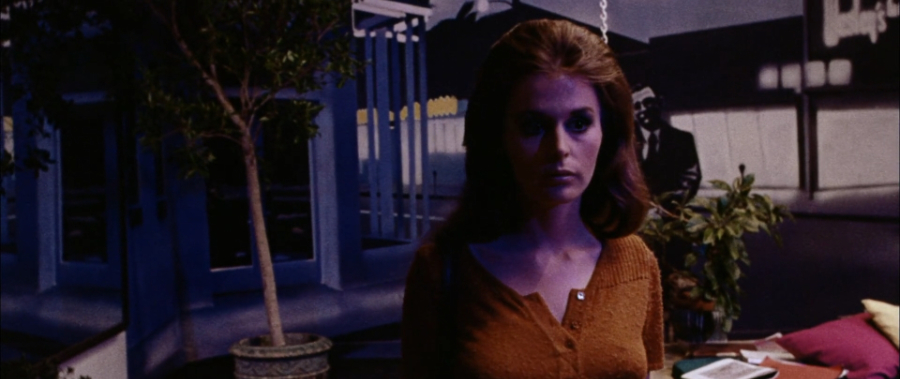
“100 years ago, the moon started turning red up in the sky, and things began to happen. It was like the redder the moon got up there, the closer people were being jerked toward Hell. People started bleeding out of control. They found children eating raw meat. It was like the town was festering with an open sore, until the night that they came down out of the canyon…”
The legend of a Dark Stranger’s arrival in a coastal town. Religious upheaval. A reckoning brought on by a cosmic event, in this case a blood moon. Fireside rituals on the shoreline. Pale-faced men and women silently watching from alleyways and windows. A journal left by an artist in the throes of madness. A house with walls painted with abstract murals of escalators, barren landscapes, and men with faces like Rorschach test patterns. Streets lined with pristine buildings, supermarkets and laundromats, all empty but lit up like lighthouses. Lapping waves on a beachfront that seems to stretch to the edge of the world. This is Point Dume, the setting for one of the most Lovecraftian films ever made.
I’m not using ‘Lovecraftian’ in the popular sense. There are no tentacled monsters. No cosmic entities trying to devastate mankind. There isn’t a single magic tome of ancient spells, or half-breed armies clamoring after our panic-stricken narrator. No, I’m using ‘Lovecraftian’ in the true sense. ‘Lovecraftian’ is not fish monsters or indescribable aliens. It is an attitude, something like a mood or a tone. It’s the loss of control, the inability to steer one’s destiny against forces we’re barely conscious of. It’s about secrets and whispers, and a horrible realization that our pain and triumph amount to nothing. Like stars, we burn out all the time, leaving nothing but a brief afterglow. That too shall fade away. It’s the uncaring, unwavering hand of fate. It’s knowing that one day the stars will be right, and even if we could predict it, what chance would we have to stop it?
We meet Arletty at a gas station. When she arrives, the lone attendant is shooting at something in the distance, but we can’t see what it is. The blackness around the gas station feels uncanny, as if no natural light is illuminating the area. It feels almost like purgatory or the vacuum of space. It’s unnatural and terrifying. An albino pulls up in a red pickup truck. There are mutilated bodies in the truck bed. Arletty drives off into the night, leaving the gas station attendant to be murdered by a frenzied, shadowy attacker.
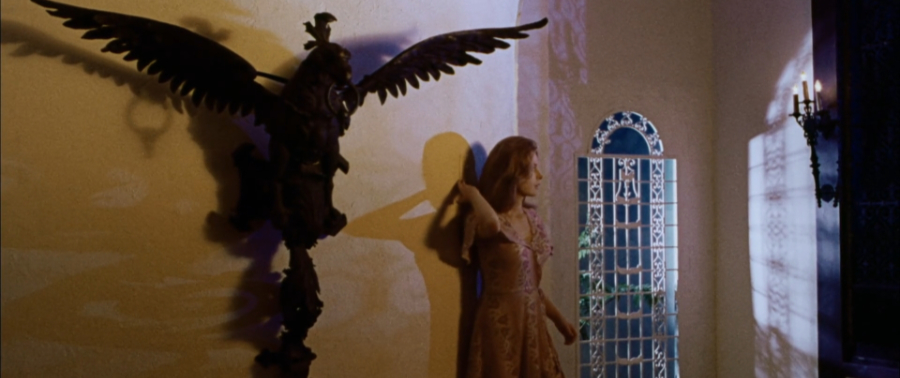
Arletty is in Point Dume to find her missing artist father. His home feels inhumanly designed, like a psychic projection onto the world. The walls are covered in Impressionist murals that frame Arletty in strange, oblique ways. His bed dangles from chains on the ceiling like some medieval torture device. Taxidermized animals sit on shelves. She finds her father’s notebooks. The latest entries are about his bad dreams and worsening physical condition. Her father’s voice narrates these entries on the soundtrack. He sounds like a man going mad. Arletty’s voice also appears on the soundtrack, narrating her inner thoughts. As the film goes on, her voiceover begins to resemble her father’s.
A blind art dealer gives her a lead on her father’s whereabouts. Someone else had been asking about him, a man named Thom. Arletty finds him at a hotel. Thom is a detached dilettante visiting from out of town with his traveling companions, ex-model Laura and teenage pothead Toni. Thom is currently interviewing Charlie, the town drunk. He recounts the legend of the Dark Stranger and the blood moon. Charlie stops her after she leaves. He tells her that he has them all fooled. He acts drunk so they’ll leave him be. If that wasn’t confusing enough, Charlie also tells her that when she finds her father, she should burn his body.
Thom and his polycule arrive at Arletty’s father’s house. She doesn’t put up much of a fight, allowing them to stay. Arletty takes a quick liking to Thom. This irritates Laura enough that she leaves late at night, accepting a ride into town with the albino in the red truck. After witnessing the strange man eat a live rat, Laura asks to be let out. She watches the truck drive away, and sees the men sitting in the truck bed staring at the moon, almost transfixed.
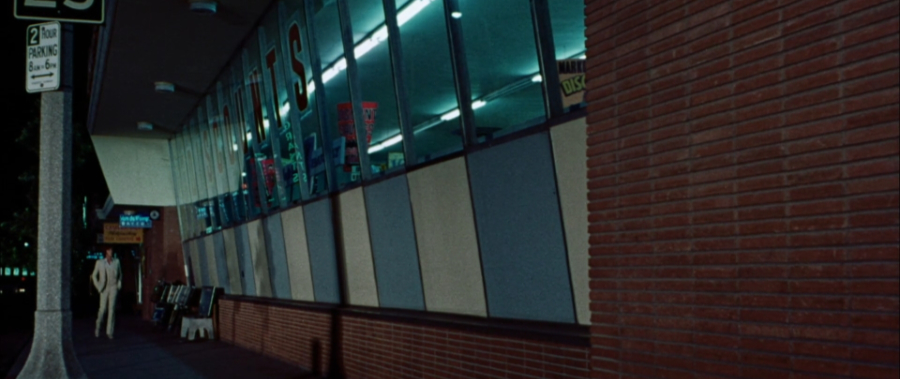
Everyone we’ve met so far has seemed lost, depressed, and distant. This extends to the town itself. The streets are clean but empty. The only sound heard is the incessant whistling of the wind. Supermarkets, grocery stores, expansive beachfront property... All empty, like the town was hastily abandoned, or taken over without anyone noticing. It’s all oddly haunting. Still like a graveyard. Unnaturally calm. Where have the townsfolk gone? Laura finally sees someone walking down the street, a pale woman with long, straight hair who briefly acknowledges her before walking away.
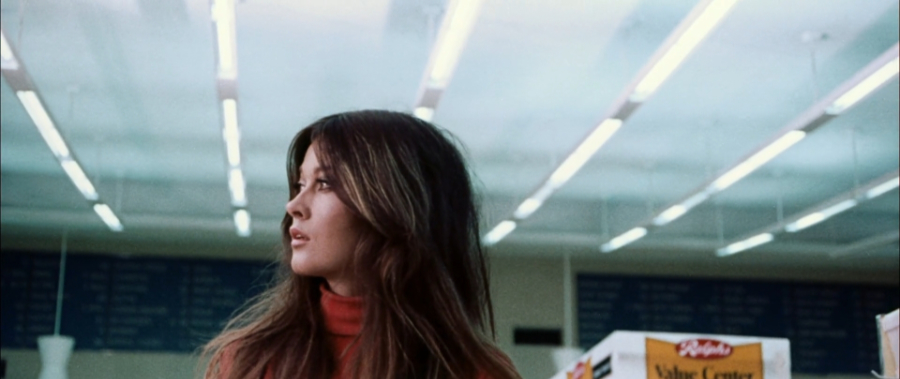
Laura follows her to a supermarket. Again, the aisles are clean but empty. Laura follows the woman deeper into the store, only to catch brief glimpses of other people walking past aisles. They all have the same appearance. Lifeless gazes. Pale skin. Almost robotic walks. Laura turns down an aisle and finally comes across a large collection of people eating raw meat directly from the displays. In unison, they turn and stare her down. When Laura rushes off, they give chase. Cornering her in the aisles, they devour her alive.
A body is discovered on the beach, crushed beneath an unfinished art installation. The police believe it is Arletty’s father, but she disagrees. The hands aren’t right. That night, Arletty discovers that she’s bleeding from her ear. Later, she’ll burn her hand, but feel no pain. This is all worryingly similar to the transformation her father detailed in his notebooks. His body temperature dropped. He began to bleed from his eyes. Is this a disease? A curse? Some cosmic calamity? Why is it not affecting Thom and Toni? And if that wasn’t Arletty’s father crushed and drowned beneath the installation, what has become of him?
I’ll leave the plot synopsis here as MESSIAH OF EVIL is not a movie you should have spoiled for you. Not that there is much plot to spoil, mind you. This isn’t a densely plotted thriller filled with exposition and exciting set-pieces. No, this is a tone poem, a film that demands you surrender your expectations. You don’t put this film on and then actively puzzle your way through it. You put it on and let it wash over you like moonlight.
There are more than a few extremely disquieting moments. The real standout is Toni’s late-night visit to a movie theater. A terrifying set piece that directly references Alfred Hitchcock’s THE BIRDS and crescendos in an act of violence so pointedly and purposefully framed that even the most media-illiterate stooge will get the message. The film reminded me of The Shadow Over Innsmouth, one of Lovecraft’s most accomplished works. Both are set in seaside towns with occult histories of mysterious visitors and cosmic maladies. The pale faces and bleeding eyes stand in for the ‘Innsmouth look’ Lovecraft gave his half-human antagonists. Both are tales of the sea and the stars, and the horrors that reside in each.
MESSIAH OF EVIL was an inauspicious directorial debut for Willard Huyck and Gloria Katz, the husband-and-wife filmmaking duo who would go on to write such classics as AMERICAN GRAFFITI and INDIANA JONES AND THE TEMPLE OF DOOM (and such duds as HOWARD THE DUCK). The film was unfinished, scooped up and edited together. Undoubtedly, the unfilmed footage would have explained more. I think a clear explanation would have hurt the film. I like that it leaves you with questions, especially since those questions all have troubling implications. Like most Lovecraft stories, our sole survivor is institutionalized, raving about a madness they can barely comprehend. It seems only fair that we too would struggle to explain all we’ve seen.
It’s a fitting finale for a film like this. MESSIAH OF EVIL dances on the edge of comprehension, flittering between surrealistic nightmare and mundanity, lurching between light thriller and vampiric zombie camp. It is awash in liminal spaces and uncanny, almost alien interiors, all meticulously designed by Jack Fisk, arguably the finest production designer of all time. Light on narrative cohesion but loaded with wonderfully terrifying atmosphere, MESSIAH OF EVIL is one of the all-time horror film greats, the kind of movie that casts a captivating spell from the first frame to the last. Uncanny, absurd, and utterly unforgettable.